
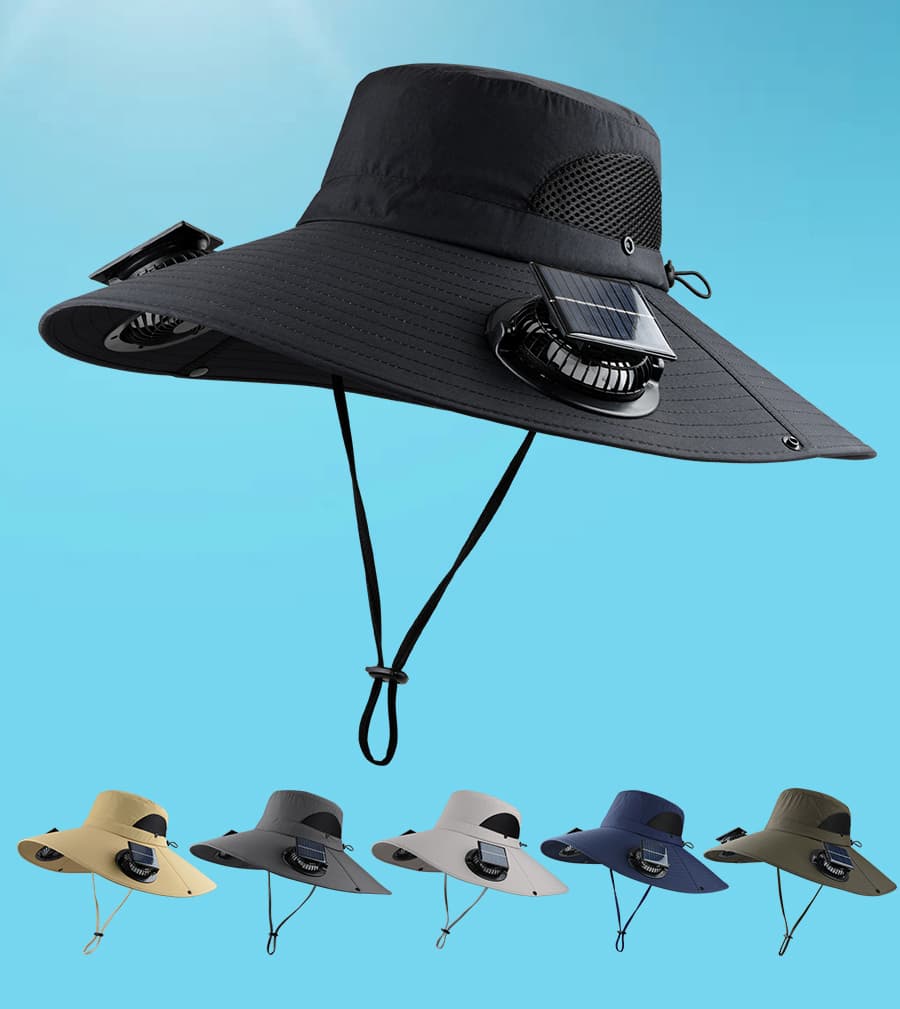
When the sun blazes down, protecting yourself from its harmful rays is crucial. Traditional sun hats have long been the go-to accessory for sun protection, but the rise of solar fan hats has introduced a new level of comfort and innovation. In this comprehensive guide, we’ll delve into the differences between solar fan hats and traditional sun hats, helping you make an informed decision tailored to your needs.

What Is a Solar Fan Hat?
A solar fan hat is an innovative sun hat equipped with built-in solar-powered fans. These fans are typically powered by small solar panels integrated into the hat’s design, providing a cooling breeze to the wearer. Some models also include USB charging ports for additional power sources.
Key Features:
- Solar-Powered Fans: Harnesses solar energy to power cooling fans.
- USB Charging Ports: Allows charging via USB for consistent airflow.
- Wide Brim Design: Offers extensive sun coverage.
- Lightweight Materials: Often made from breathable fabrics for comfort.
What Is a Traditional Sun Hat?
Traditional sun hats are classic accessories designed to shield the face, neck, and ears from the sun’s rays. They come in various styles, including wide-brimmed hats, bucket hats, and visors, and are typically made from materials like straw, cotton, or polyester.

Key Features:
- Sun Protection: Provides shade to the face and neck.
- Variety of Styles: Available in numerous designs to suit personal preferences.
- Lightweight and Portable: Easy to carry and pack.
- No Power Source Required: Operates solely through its physical design.
Solar Fan Hat vs. Traditional Sun Hat: A Detailed Comparison
| Feature | Solar Fan Hat | Traditional Sun Hat |
|---|---|---|
| Cooling Mechanism | Solar-powered fans provide active cooling | Passive cooling through shade |
| Sun Protection | UPF-rated fabric offers sun protection | UPF-rated fabric offers sun protection |
| Comfort | Enhanced comfort with airflow | Comfort varies by material and design |
| Portability | Slightly bulkier due to fans and panels | Generally lightweight and easy to pack |
| Maintenance | Requires occasional cleaning of fans and panels | Easy to clean and maintain |
| Price Range | Typically higher due to technology integration | Wide range, generally more affordable |
Pros and Cons at a Glance
Solar Fan Hat
Pros:
- Active Cooling: Provides a breeze, reducing heat buildup.
- Innovative Design: Appeals to tech enthusiasts and early adopters.
- Versatile Power Options: Solar and USB charging capabilities.
Cons:
- Higher Cost: Generally more expensive than traditional hats.
- Bulkier Design: Fans and panels add weight and size.
- Battery Life: Dependent on solar exposure or USB charging.
Traditional Sun Hat
Pros:
- Affordable: Budget-friendly options available.
- Lightweight: Easy to carry and wear for extended periods.
- Variety: Wide range of styles and materials to choose from.
Cons:
- No Active Cooling: Relies solely on shade for heat relief.
- Limited Features: Lacks additional functionalities like fans.
Which One Should You Choose?
Your choice between a solar fan hat and a traditional sun hat depends on your specific needs and preferences:
- Choose a Solar Fan Hat if:
- You spend extended periods outdoors in hot climates.
- You value technological innovations and added comfort.
- You prefer a hat that offers both sun protection and cooling features.
- Choose a Traditional Sun Hat if:
- You’re looking for a budget-friendly and lightweight option.
- You prefer simplicity without additional features.
- You need a reliable hat for casual outdoor activities.

Final Thoughts
Both solar fan hats and traditional sun hats have their unique advantages. If you’re seeking innovative features and enhanced comfort in hot conditions, a solar powered fan hat might be the right choice for you. However, if you prefer a classic, lightweight, and cost-effective option, a traditional sun hat remains a reliable companion for sun protection. Consider your specific needs, budget, and style preferences to make the best decision for your outdoor activities.